105 points bookofjoe 4 hours ago 174 comments
dlisboa 4 hours ago | parent
Full self-driving doesn't strike me as necessary to prevent deaths.
jpcfl 4 hours ago | parent
> Once drivers move from the novelty phase to the post-novelty operational phase, behavioral adaptation may begin to occur and overreliance and over-trust in the automation features potentially develop, including a greater willingness to look away from the forward road (as shown in the VCC data set). [1]
I'm not sure if this is more dangerous than strictly human-operated vehicles, but I would wager that it is more dangerous than strictly autonomous vehicles.
1. https://aaafoundation.org/research/understanding-the-impact-...
notahacker 3 hours ago | parent
If there are additional problems caused by human drivers, it's surely that they are inclined to intentionally override the system with dangerous behaviours which is a separate problem entirely, or that their driving ability has atrophied so much from not driving they are unable to handle the boundaries of Level 4...
lazyasciiart 4 minutes ago | parent
semi-extrinsic 3 hours ago | parent
The cause was found to be drivers with 2WD losing a little traction early in their drove and subsequently slowing down, while drivers with 4WD just kept driving like normal until they were suddenly off the road.
Another statistic is that intoxicated or otherwise impaired drivers cause more than half of all fatalities. So making a solution with machine learning and cameras that could retrofit into any existing car and just deny starting the car for such drivers, and having insurance companies cut premiums for having such gadgets installed, would be much more effective than any form of self driving or similar.
https://mb.cision.com/wpyfs/00/00/00/00/00/3E/5A/A2/wkr0011....
ryandrake 42 minutes ago | parent
Also, they really need to be able to detect the other really bad cause of impairment: mobile phone usage.
redwall_hp 4 hours ago | parent
The only problem is not every car on the road has it yet.
epgui 4 hours ago | parent
stephencanon 4 hours ago | parent
Terr_ 3 hours ago | parent
I realize this relies heavily on the questionable sanity and ethics of insurance companies. Even if they agree you aren't personally at fault, they'd probably just increase the premiums for everyone with that model, rather than sue the car manufacturer.
ozim 35 minutes ago | parent
The same for skiing you don’t have eyes on the back of your head, one behind you is responsible for not crashing into you.
In car you have rear mirrors but if you have something in front of you and breaking you are not going to look in the mirrors.
WalterBright 3 hours ago | parent
Some time later, I was on a snowy road. The cars in front of me stopped, I stopped, and checked my rearview mirror. There was a truck, who clearly wasn't going to stop. I pulled off to the side, and he hit the car in front of me.
BobaFloutist 1 hour ago | parent
To be fair, if the cars behind you had automatic emergency braking you would be at much lower risk of getting rear-ended when there's a false positive.
dlisboa 4 hours ago | parent
Yep. ADAS should be mandatory like seat belts and airbags. A regulatory body should be able to come up with a minimum standard for it.
officeplant 3 hours ago | parent
Except I had to turn it off for my Ford E-Transit, because it will freak out at nothing. Sometimes it screams at me for cars that aren't even in my lane that suddenly slowed. Sometimes it misjudges a ripple in the crappy asphalt here as an obstacle I'm going to hit. There is a high chance its going to brake for no reason at all and cause an accident.
I left the warning system on, but I will never give it control over the brakes.
throw1234567891 3 hours ago | parent
uuddlrlrbaba 3 hours ago | parent
officeplant 3 hours ago | parent
Loughla 44 minutes ago | parent
Not great.
Denatonium 24 minutes ago | parent
Even when it doesn't slam on the brakes, if you were concentrating on the road, those jarring beeps can just as easily break your focus on driving as they can break your focus on a distraction. I think it's better to avoid distraction by keeping cruise control off, and you can compensate for having human-level reaction time by following at a safe distance and staying in an appropriate gear or setting an appropriate level of regenerative braking to avoid mindlessly getting too close to the car in front of you.
I think that too often, driver assist features are being added to cars to compensate for the other features (like adaptive cruise control) that encourage drivers to mentally disengage from the task of driving. There's also the fact (well, opinion) that driving a car without electronic assists and nannies is fun and engaging (especially on back roads with the windows down and the radio up). Riding in an autonomous vehicle is just as dull as riding on public transportation, all while being less efficient, less social, and worse for the environment.
It would be interesting if we could somehow test how the reduction in crashes with the introduction of driver assists would compare with if we had just banned cruise control, introduced minimum visibility and minimum suspension stiffness standards, and mandated manual transmissions.
jeffbee 11 minutes ago | parent
MostlyStable 4 hours ago | parent
AlotOfReading 4 hours ago | parent
The data to differentiate these levels is pretty limited for a variety of reasons, and the problem only worsens when you conflate AEB with ADAS as the IHS/IEEE do in this article rather than use an OEDR-based definition.
hoss1474489 3 hours ago | parent
Due to the nuances of my vehicle, the built-in hands-on-wheel nag was still active and required (small) driver wheel inputs every 10 seconds to prevent the beeps. Just keeping both hands on the wheel was enough to pacify the nag. But this forced me to keep attention on the vehicle, more than OpenPilot's face direction detector. Anecdotally I am certain this kept me more engaged than if I could have gone hands off.
The net effect was I had more capacity to be aware of what was going on around me on the road, AND I didn't feel nearly as fatigued at the end of the drive. Keeping the car between the lines consumes a little bit of cognitive energy constantly, which compounds over a long drive. Freeing up that load allowed me to pay more attention to what was happening on the rest of the road. And the mental burden was still half as much--I felt like I had driven maybe 4-5 hours instead of 9.
I have some ideas for how I might disable the built-in nag, but I'm pretty sure doing so would make my car less safe. The current configuration might already achieve the safety maximum for ADAS based on front-facing cameras only.
It increases situational awareness while reducing fatigue, and I think that anything further I try to do will adversely affect one or both of those effects.
Junk_Collector 4 hours ago | parent
Article is short on data instead referencing a bunch of aggregated IIHS studies.
bestouff 4 hours ago | parent
computomatic 1 hour ago | parent
n0us 4 hours ago | parent
jjordan 4 hours ago | parent
matchbok3 4 hours ago | parent
Extremely selfish.
gottorf 4 hours ago | parent
It appears to some degree that we as a society do not want risk priced optimally to each individual.
linkregister 3 hours ago | parent
We replaced preexisting condition coverage with age-based tiered pricing. If you doubt me it's trivial to validate this using your state's ACA marketplace.
uuddlrlrbaba 3 hours ago | parent
jedberg 4 hours ago | parent
Insurance companies aren't political -- they charge for whatever costs more.
jjordan 3 hours ago | parent
jedberg 3 hours ago | parent
We saw this before -- they used to charge people who lived in high crime areas more money. They had to stop because it turned out that those high crime areas also had a lot of poor people, so the government stepped in and stopped allowing pricing by zip code.
But the insurance companies weren't wrong about the risk -- those customers cost them more. So instead they had to raise everyone's rates to account for the fact that they (rightly) could not discriminate.
I suspect the same would happen here. That poorer people could not afford self driving, and they same anti-discrimination rules would apply.
salawat 3 hours ago | parent
Insurance companies you are required to interact with by law are absolutely political.
jedberg 23 minutes ago | parent
iknowstuff 3 hours ago | parent
intrasight 3 hours ago | parent
lefra 3 hours ago | parent
If autonomous cars result in less damage than humans, their insurance price will be cheaper than human drivers, but there's no reason to raise the human rate at the same time, their accident rate should stay the same.
intrasight 2 hours ago | parent
We need that increase volume and reduced accident count in order to grow without having to build more roads.
structural 27 minutes ago | parent
Why not aim for the same distance between cars and twenty times more safety instead?
jjordan 3 hours ago | parent
alecbz 3 hours ago | parent
SR2Z 42 minutes ago | parent
Sober, well-rested human beings who pay full attention to the road are surprisingly good drivers, to the point where I'm not actually sure that robotaxis can reliably beat them yet.
Yeah, a hundred years from now fewer people will drive themselves, but considering how many people DESPISE driving and only do it because it's required of them, that isn't bad.
linkregister 3 hours ago | parent
pessimizer 3 hours ago | parent
This will never happen, because the entire purpose of the corporate structure is to avoid responsibility.
raincole 3 hours ago | parent
bluGill 3 hours ago | parent
I've lost enough friends to drivers who made a mistake. If self driving is better in just that, but worse every other way: I'm for it.
That might be a big if above, but of true them I support it. Drive on a private track or a video game if you must. Leave the real world to safe.
matchbok3 4 hours ago | parent
nancyminusone 3 hours ago | parent
devilsdata 34 minutes ago | parent
I think people are quite justified in being skeptical of new technology, especially when the track record has shown that the promised societal benefits often never actually materialise. Worse, still, the money earned from selling the new technology is used to make conditions worse for most people. Big tech has a lot to answer for.
I'd be less skeptical if the values of tech capitalism shifted to become more pro-human. They really haven't, and they probably won't. So for now, consider me bearish on new tech.
bko 4 hours ago | parent
entropi 3 hours ago | parent
This is exactly the message, and I for one welcome the anti-cool-aid sentiments being very visible in public spaces.
SR2Z 3 hours ago | parent
I have NEVER seen a single person accuse anyone of being a bad person for still preferring to drive a car manually. Not once, not even the usual one or two crazy people you can find to support almost any other crazy statement.
Where is the kool-aid from the robotaxi side that's so visible? Keep in mind that "kool-aid" implies that something is factually incorrect.
BoingBoomTschak 3 hours ago | parent
Just read further in this thread, will you?
SR2Z 49 minutes ago | parent
quadrifoliate 3 hours ago | parent
A lot of these are true about other things like pedestrian-friendly streets, bike lanes, and mass rail transit. The kool-aid is that the robotaxi people act like they are the first one to solve this problem.
thereisnospork 2 hours ago | parent
Could it be solved in other ways? Sure, but it hasn't. Why it hasn't is an interesting question but that's out of scope.
SR2Z 50 minutes ago | parent
Pedestrian friendly streets are great! You can't walk that far, and I love walking places when I have time and energy.
Bike lanes are great! I bike to work. If I'm not careful I'll arrive sweaty, and that inherently limits when and where I bike.
Mass rail transit is great! It cannot get directly to every door or frequently even to within walking distance of every door (I take a train to the office when I don't wanna bike).
I really do understand that it's trendy to hate on cars. There are a lot of bad things that come with car dependence.
All of that is true AND YET cars make us more productive and allow us to do things that would be impossible otherwise.
Robotaxi companies are not trying to replace any of those things. That makes no sense because they don't need to do that to succeed.
So I will ask again: what is the kool-aid that I'm supposedly drinking?
jasode 3 hours ago | parent
The author Lawrence Ulrich references research from the Insurance Institute for Highway Safety. Why would it be "obvious" that they are paid PR shills for Tesla/Waymo?
I'm jaded and cynical so I can accept that they may be secret PR mouthpieces but isn't it reasonable to expect a little evidence rather than just throwing out a random accusation?
cucumber3732842 3 hours ago | parent
The alignment between what is good for you and good for the interests they answer two is not all that much.
But of course, they work very hard to market themselves as peddlers purely of safety, after all only a barbarian would be against safety <mockingly clutches pearls>
This isn't to say that some people they don't care, but giving a crap isn't gonna change the incentives.
Apocryphon 1 hour ago | parent
throwaway198846 1 hour ago | parent
bko 3 hours ago | parent
Argue how the author was funded by such and such a group with ties to this other group. Say something about the methodology used. Say literally anything about the actual post.
This would be the equivalent of me just calling you a "shill" with no other context. The burden of proof is on you since you're making the claim that this is misleading PR.
parapsychic 4 hours ago | parent
4d4m 3 hours ago | parent
vagrantJin 4 hours ago | parent
dmurray 3 hours ago | parent
CM30 3 hours ago | parent
A lot of the time you don't own them, so they're operating on the terms provided by the companies and government, even when it's directly against your own interests. The idea of a car that can't drive certain places, be used at a certain time or be used by certain people feels like a terrifying inevitability, and one which society should refuse at all costs.
If you drive your own vehicle, it goes where you want it to go. If you don't drive your own vehicle, it goes where a company or government wants it to go.
SR2Z 3 hours ago | parent
Woah! This conspiracy goes deeper than I thought! Next you'll tell me that a taxi ride requires mutual consent between me, the taxi driver, and the dispatch company!
tqi 3 hours ago | parent
I think privacy conscious folks like yourself consistently overrate how much purchase this argument has. I am perfectly happy to forgo this in exchange for a sufficient increase in convenience / safety (for myself and others). This is not because I have been brainwashed by autonomous vehicle company propaganda, it is because I have different values and concerns.
foobarian 3 hours ago | parent
entropi 3 hours ago | parent
Lets not forget that its all about the profits, and if we truly want to save lives there are more cost-efficient ways than what some tech sales-people peddle.
WillPostForFood 3 hours ago | parent
atleastoptimal 3 hours ago | parent
4d4m 3 hours ago | parent
tikhonj 3 hours ago | parent
And, of course, to support the policy choices that reduce how much we subsidize driving and improve infrastructure for those alternatives.
dzhiurgis 3 hours ago | parent
Kiro 3 hours ago | parent
sp1nningaway 2 hours ago | parent
You are more likely to kill someone driving your huge SUV than you are taking a Waymo. Driving your own car certainly doesn't make you a bad person, but I hope self-driving cars will be ubiquitous and safe in the future. When that happens, choosing to drive yourself will be a selfish act, just like exposing people to secondhand smoke is now.
structural 32 minutes ago | parent
"When that happens, choosing to drive yourself will be a selfish act, just like exposing people to secondhand smoke is now." Really? I drive on logging roads a few times a month to get to some property. This is pretty sketchy even in good conditions and there's always the chance of getting stuck and having to hike a mile or two the rest of the way up to go get the tractor and sort it out. I'm probably not buying a self-driving car any time soon, if ever.
Now, is having self driving taxis a fantastic idea in a very dense city? Of course. There's huge benefits in keeping the average car as safe, efficient in both energy and pollution, and highly utilized as possible. Are these also a good retrofit to dense-ish suburbs where a bus/rail network isn't quite enough (and the costs to build it in already-developed land are unpalatable)? Also yes. But that's not ubiquitous, that's just part of a larger system that needs to be able to serve all users.
And if your point is that "move out of the mountains and into a city because that's the less-selfish option"... that's a certain kind of political statement, I guess.
twobitshifter 1 hour ago | parent
Even today, I don’t like the intrusiveness of the insurance monitors you can install on your car today and I am willing to forgo that discount to keep my privacy.
dghlsakjg 4 hours ago | parent
Really there should be an obstacle course of some kind based on the most common anomalies leading to accidents. Partially obscured road signs, worn paint markings, obscured sight lines caused by dense parking, driving on a snowed over surface, etc.
throwup238 4 hours ago | parent
I passed because I didn’t kill anyone in the span of eight blocks.
margalabargala 4 hours ago | parent
iknowstuff 3 hours ago | parent
AlotOfReading 3 hours ago | parent
There's the beginnings of a standard for L2/L3 vehicles in Europe, and ongoing discussions about what L4 standards could look like, but neither addresses "adversarial" situations.
Animats 1 hour ago | parent
The trouble with "driver assistance" systems is the handoff to the driver. That's not reliable. Results from the aviation community indicate that it takes about ten seconds after an autopilot disconnect before the pilot has stable control of the aircraft. "L3.5" accepts that. The < 2 second response required by some L2 systems does not.
32ahgf 4 hours ago | parent
throw1234567891 2 hours ago | parent
Robotbeat 48 minutes ago | parent
devilsdata 37 minutes ago | parent
Robotbeat 33 minutes ago | parent
Now if you’re ONLY serving high density and high passenger volume times, buses are incredible.
devilsdata 25 minutes ago | parent
I am sure if you did the math, having the occasional empty bus does not hold a candle to the amount of dead mass being dragged along in single-occupant cars.
The wear-and-tear on the road from the sheer volume of cars alone makes them cost more to us as a society than busses.
So regardless of density and passenger volume, busses are incredible.
zamadatix 24 minutes ago | parent
danieldevries 4 hours ago | parent
More sensors with 360 degrees. Faster reaction time. Constantly improving, be it from real world data or from a simulated environment. Zero fatigue. No emotion evolved. No drugs are alcohol in the system.
Fyi. Long robotaxis.
raincole 4 hours ago | parent
derbOac 3 hours ago | parent
The target article even notes that "while Waymo leads the industry in transparency, and robotaxi operators are required to report even the tiniest scrape to the National Highway Traffic Safety Administration (NHTSA), not every company voluntarily reports their total miles driven."
My sense is that there's a lot of massaging the data by autonomous car companies to make their data look good. The article and a linked article describes the comparisons as "human drivers in the same driving conditions" which is kind of vague to me and isn't the same as, say, taxi drivers to robotaxis. It's also robotaxis and not general driving conditions etc.
I always feel like these comparisons become murky in other ways. For example, if autonomous vehicles have lower accident rates in general, but fail in catastrophically bad ways when they do fail — ways that would never happen with a human driver (for example, by inexplicably driving into an avoidable semi trailer for no reason, killing the occupants) — is that better? What if you eliminate cases where the driver is intoxicated? Aren't those cases cases of malfeasance at some level, that could apply to autonomous vehicle use? Do you hold autonomous vehicle companies accountable for deaths, charging executives with manslaughter? How should we think about accountability versus safety?
I'm not trying to argue against autonomous vehicles. I just feel like these types of published discussions get oversimplified often in a way that seems to parallel similar discussions of AI in general, and seems sympathetic to their adoption rather than a rigorously skeptical appraisal.
paulnpace 3 hours ago | parent
The comparisons I've seen are with the general population, not professional drivers. How might that comparison look, since this is a paid service?
watwut 4 hours ago | parent
fierycatnet 3 hours ago | parent
paulnpace 3 hours ago | parent
jillesvangurp 33 minutes ago | parent
Insurance and liability become a lot simpler if you just don't touch the controls at all. There will be a clear split between people who don't drive and therefore are not liable and the remaining group that still drives and is causing most of the remaining accidents (and cost for insurers). That's going to inevitably get more scrutiny from everybody: insurers, authorities, occupants of self driving vehicles, other manual drivers.
This will probably be insurance driven. If you don't need to drive anymore, you don't actually need a license. And if you are not driving, you can't be held liable for damage caused by your vehicle. You'll still need insurance to cover any damage/harm your vehicle might cause but this will likely be quite cheap given autonomous cars are safer and on average don't really get involved in accidents. It's quite possible that eventually just gets folded into warranty terms for your car and covered by the manufacturer.
As manually driving increasingly becomes a choice rather than a necessity, your insurance for that might become conditional on you being current and proficient in the same sense that licensed pilots need to regularly do check rides to verify they can still safely operate a plane. Additionally, insurers might insist on you passing a regular health checks to verify that you are still fit enough to drive. Some countries already test elderly drivers but there are lots of elderly people with pretty serious health issues passing these tests as well. Expect this to get a lot more strict.
fierycatnet 4 minutes ago | parent
archagon 21 minutes ago | parent
ks2048 3 hours ago | parent
BoingBoomTschak 3 hours ago | parent
Another thing I'd really like to know: let's suppose that these are indeed safer than the average driver. Is it also the case for the median driver?
SoftTalker 1 hour ago | parent
alexpotato 1 hour ago | parent
- autonomous cars cause fewer accidents
- so either insurance will be cheaper for them
- AND/OR human driving car insurance goes up
- even if only one happens, the relative cost of insurance will change in favor of autonomous
- driving your own car becomes a kind of "prestige" thing where only really wealthy people do it (similar to owning your own plane etc)
ceejayoz 55 minutes ago | parent
lol
jdm2212 48 minutes ago | parent
alexpotato 39 minutes ago | parent
This is an excellent point.
Someone 35 minutes ago | parent
In 2015, Volvo issued a press release claiming that Volvo would accept full liability whenever its cars are in autonomous mode.
[…]
Starting in September 2023 in the United States, Mercedes-Benz takes liability for the Level 3 Drive Pilot as long as the "user operates Drive Pilot as designed," but "the driver must be ready to take control of the vehicle at all times when prompted to intervene by the vehicle."
GolfPopper 30 minutes ago | parent
jeffbee 14 minutes ago | parent
mostly_harmless 1 hour ago | parent
(https://www.iihs.org/research-areas/fatality-statistics/deta...)
The majority of drivers are good, but some drivers are really bad. Life in USA is extremely car-centric and taking away a license is often infeasible and the offender usually drives without their license anyways. If anything, I'd like autonomous cars to give a legal out to remove bad drivers. You get a DUI, or commonly speeding? You may only take an autocar.
BugsJustFindMe 1 hour ago | parent
I take issue with this. The majority of drivers are "mostly fine as long as circumstances are favorable", not "good". People for the most part do not even know about the concept of defensive driving let alone practice it. Even the best people are fundamentally complacent in basically everything they do. They zone out sometimes, they get too close, they don't always look where they're going. They don't get into more collisions because the world doesn't throw more obstacles at them, not because they're good at driving.
Retric 54 minutes ago | parent
Most drivers are safer than the average, because you can’t go below 0 and some people are really bad.
ryandrake 50 minutes ago | parent
BugsJustFindMe 38 minutes ago | parent
seizethecheese 47 minutes ago | parent
bad_haircut72 46 minutes ago | parent
edit: someone else replied with data contrary to this, maybe they are right but Im leaving this here to represent the counterargument
BugsJustFindMe 42 minutes ago | parent
ummonk 42 minutes ago | parent
binary0010 1 hour ago | parent
It's sad we don't have a better way for people in these situations to do what they need without driving. It will be incredible to have autonomous driving just for older and or disabled drivers like this.
Robotbeat 52 minutes ago | parent
giancarlostoro 45 minutes ago | parent
Mostly yes, but some states like NYC its more common to take trains, taxi cabs / Uber / Lyft, etc.
GrinningFool 31 minutes ago | parent
driverdan 23 minutes ago | parent
JoeAltmaier 20 minutes ago | parent
scotty79 15 minutes ago | parent
Well, 80% of us believes ourselves to be above average, so there's that.
kevin_thibedeau 1 hour ago | parent
JoeAltmaier 52 minutes ago | parent
anon7725 47 minutes ago | parent
not if they're in a tunnel or a highrise canyon, or there is weather-related interference, or the maps have not been updated to reflect reality, or there is a detour for construction, etc.
cbondurant 46 minutes ago | parent
I think it would be meaningful to also compare the fatality rates of the time tested and proven forms of public transit to these self driving cars too.
ElijahLynn 42 minutes ago | parent
But I do like what you're going with that and maybe we could have public autonomous car infrastructure that we all share. And just one large global team working on awesome autonomous vehicles. That could be little pod type vehicles for one person and bigger ones as needed. Cuz the road system is pretty broad and amazing right now.
marssaxman 39 minutes ago | parent
EA-3167 38 minutes ago | parent
marssaxman 32 minutes ago | parent
I didn't say that scooters were a solution for everyone, you may note. I don't think there ought to be one solution for everyone, but given the option of micromobility, I really have no use for autonomous vehicles.
vrosas 34 minutes ago | parent
marssaxman 20 minutes ago | parent
edgarvaldes 8 minutes ago | parent
Not so great for family trips, shopping around, etc.
embedding-shape 38 minutes ago | parent
Where is that last mile exactly? In many metropolitan areas, you typically have available a broad selection of trains, subways, trams and/or buses of different sizes that takes you last mile. Some places even have special buses, like the "Neighbourhood Bus" we have here (https://www.barcelona.cat/mobilitat/sites/default/files/bcn-...) for narrow and steep neighborhoods up on mountains.
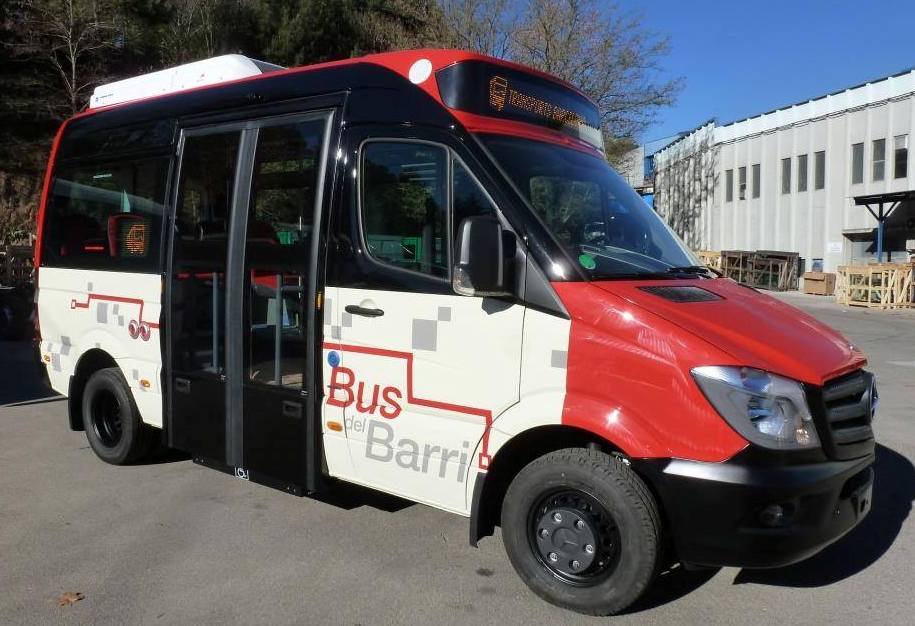
It's certainly doable, if you wanted to have last mile public transport.
SrslyJosh 36 minutes ago | parent
> I'd much rather all of the resources that are going into autonomous cars was instead going into proper public transit infrastructure.
You're almost certainly an American, and you probably have no idea what public transit is like in countries that have been investing in it for decades instead of focusing 95% of their resources on infrastructure for cars.
Clamchop 5 minutes ago | parent
Private cars are costly and spend most of their time just taking up space.
We'll see if it ever works out that way but a boy can dream.
jeffbee 16 minutes ago | parent
maxwellg 12 minutes ago | parent
I live in the west side of San Francisco, and we may get a subway station by 2050 if we're exceptionally lucky. I'd rather have self-driving cars this decade, please.
lazyasciiart 10 minutes ago | parent
Amtrak is public transportation. Airlines are pretty close to public transportation. Local government doesn't need to be involved.
jmward01 34 minutes ago | parent
I want FSD, but I want it on consumer terms. Safety is only one aspect and it is the one constantly brought up. It is important, but in the long term it will be solved and the more important things will remain. Concepts of privacy, ownership and access will be the real issues of the future and should be the most important discussions about FSD, and transportation in general, now. If we allow FSD to go the rout it appears it is going, car companies requiring you forfeit you privacy, subscriptions and not ownership and companies clearly demonstrating their first attempts at gating access by advertising where you should go and emphasizing where they don't want you to go, then the FSD future we are being led to is a dystopian mistake.
You may not believe FSD will ever get here but I think it is easy to see the direction car companies are pushing things. I am happy to see safety is being solved but I would rather see a major push towards a FSD future that is more like a 1950's space opera than a 2000's tech dystopia.
motoboi 27 minutes ago | parent
gwbas1c 23 minutes ago | parent
goda90 2 minutes ago | parent