23 points mpweiher 4 hours ago 40 comments

emilss 4 hours ago | parent

Blame German hippies

chromanoid 3 hours ago | parent

Exactly, (and all other citizens who protested against radioactive waste) but when they chained themselves to the railroad tracks to protest the CASTOR transports, they didn't think about abolishing capitalism. At least not my parents nor grandparents did so when protesting and getting fined for it.

ZeroGravitas 2 hours ago | parent

Yep, if they hadn't supported solar and wind then they wouldnt be cheap enough to save the world and we would need to use nuclear instead.

This guy doesn't think wind and solar work so he needs a complicated explanation for why they are being adopted faster than nuclear.

platinumrad 4 hours ago | parent

One of the most interesting statements is that NGOs repeatedly offered him money to start anti-nuclear campaigns in China. Who is incentivized to do this?

ggm 4 hours ago | parent

As a side comment, often times meta questions are a front for a real issue. People ask the meta question when pace on the real question doesn't go their way.

Australia is a case in point. Why Australians are opposed to nuclear is history. What's current is that sufficient pace in other forms of energy mean any deployment of nuclear will be too late to mitigate AGW and the same spend on renewable energy would work as well and even be net cheaper.

The science of nuclear is fine. Because of history, the timing is awful.

onraglanroad 4 hours ago | parent

Because it's overpriced crap that can't do dispatchable.

But hey, if you want to do nuclear go ahead. With your own money. Get together with all the other nuclear fans and invest in a plant yourself.

But not a single penny of government subsidy, no guaranteed prices, nothing. You sell your electricity on the open market like all the others.

That way you can prove how cheap it really is and make a profit from your investment.

No? Thought not.

NBJack 4 hours ago | parent

Citation needed. It's pretty cheap to keep it running at full tilt. And the surge in demand due to things like datacenter build outs are very likely to dramatically increase baseline demand anyway.

We have lots of ways to store excess energy now. Seems reasonable to pursue.

triceratops 4 hours ago | parent

If it's cheap go for it. Without any government insurance backstop.

jdnddiid 4 hours ago | parent

profit is your god not mine

credit_guy 3 hours ago | parent

> But not a single penny of government subsidy, no guaranteed prices, nothing

Democracy does not work like that. I do want government support for nuclear. You don't. Some people are like me, some like you. It looks like right now more people are like me, at least in the state of New York, where I live, and the government enacts policies accordingly, [1].

[1] https://www.governor.ny.gov/news/governor-hochul-announces-c...

marssaxman 4 hours ago | parent

Nuclear would have been a good idea 30-40 years ago. Now it is too late: money spent on nuclear would accomplish less climate benefit than money spent on renewables.

SkiFire13 4 hours ago | parent

I bet you could have used the same reasoning 30-40 years ago

jdlshore 4 hours ago | parent

No, because solar panel and battery technology was much worse 30-40 years ago.

patapong 4 hours ago | parent

Yep fully agreed. Perfect example of path dependence: https://en.wikipedia.org/wiki/Path_dependence

fanwood 4 hours ago | parent

This is nonsense, we will need clean energy forever, so the more we build now the better. We have to build both nuclear and renewables as fast as we can. We're producing more co2 today than at any other moment in history, we haven't even started to reduce fossil fuel consumption yet. Nuclear can be much cheaper than renewables+storage in a grid without fossil fuels, especially if we commit to build a lot of plants together instead of one-offs. I think most people completely underestimate the challenge of moving away from fossil fuels, this will take centuries not decades unfortunately

triceratops 4 hours ago | parent

You're right about everything, except this

> Nuclear can be much cheaper than renewables+storage in a grid without fossil fuels, especially if we commit to build a lot of plants together instead of one-offs

I think in the absence of some kind of materials science breakthrough that makes radiation a non-issue, nuclear will always be more expensive than renewables + storage.

See https://news.ycombinator.com/item?id=50216776. Even the nuclear industry admits wind is cheaper than nuclear.

Detrytus 3 hours ago | parent

Radiation is non-issue already, since the amount of used nuclear fuel that needs to be securely stored is tiny. You could get away with one, few acres big storage facility per continent, basically.

Also, wind being cheaper than nuclear is irrelevant, since wind is highly unreliable.

triceratops 3 hours ago | parent

I'm not talking about waste storage.

Building and running nuclear is so expensive because it involves radiation, which we find scary - no matter the rationality. Thick concrete, armed guards, check everything 5 times, submit approvals and change requests in triplicate. Astronomical cleanup costs if there's an accident (Fukushima and Chernobyl cost > $100 billion).

fanwood 3 hours ago | parent

Renewables are cheaper than nuclear on a LCOE basis. However when you are running the grid without dispatchable generation you need to consider the cost of storage, which right now is much higher than solar or wind per kwh produced (and that's in addition to the energy cost to charge the battery). In particular, the cost of storage increases with renewables penetration, because every additional kW of battery capacity will be cycled marginally less than the previous one. Running an isolated grid with only solar, wind and batteries is orders of magnitudes more expensive than the cost per kWh of solar or wind alone. In that situation, nuclear is much cheaper even today. As for the radiation, this is purely a regulation problem. We decided to be much more strict with radiation coming from nuclear power plants than say coal power plants, which today release orders of magnitude more radioactivity than nuclear power (through coal ash), as well as many more even worse contaminants such as lead or arsenic which do not have a half life and will be toxic forever

triceratops 3 hours ago | parent

All fair points. But I think the cost of storage will drop faster than the cost of building new nuclear. We build so damn much of it the learning curve is just much faster.

Regulation around radiation is downstream of people finding it scary at a very deep level. Rationally, as you pointed out, they ought to worry much more about the foulness coming out of coal plants. But unless you become a benevolent dictator that's the regulatory environment for nuclear for the foreseeable future.

Not to mention when nuclear does fail catastrophically, the costs blow out all of the money saved. Chernobyl and Fukushima are prime examples. We may never have one of those again, with improved designs. But if we do it's going be ruinously expensive.

fanwood 3 hours ago | parent

I feel this is an ideological position. If you run the numbers, nuclear is way cheaper today in a fully zero-carbon grid even if you assume the cost of storage goes down by 10 times. This is because as you increase reliance on storage, curtailment and low-cycling storage deployment becomes massive and thus you need to massively overbuild both generation and storage (or use hydrogen or similar for long-term storage, which is likely even more expensive and inefficient). And this assumes that the cost of nuclear stays the same as deployment increases, which is simply not true when looking at past experiences of large nuclear deployment like in France, Korea or China. China is right now building last-generation reactors for close to $2000/kW, which is absurdly cheap

triceratops 2 hours ago | parent

> If you run the numbers, nuclear is way cheaper today in a fully zero-carbon grid even if you assume the cost of storage goes down by 10 times

Can you provide the numbers please? The most recent source I found is from 2019.

> you need to massively overbuild both generation and storage

And does this account for more interconnection between regions to smooth out variability?

> China is right now building last-generation reactors for close to $2000/kW, which is absurdly cheap

Despite this they're building about an order of magnitude more solar every year. They have 20x more solar generation installed than nuclear (1200 GW vs ~60 GW).

caidan 3 hours ago | parent

This is exactly the point! Exactly! Most people are running around acting as if the we are in the last chapter of a book or the last 30 minutes or a movie so all the die are cast and we’ve almost made it to the finish line. It’s a cultural insanity. We should be planning on thousand-year timelines which sounds like a lot but a thousand years ago was yesterday! The aqueduct of Segovia is TWO thousand year old infrastructure! Our narcissism will doom our grandchildren and they will curse us for the short-sighted, self-obsessed fools that we are.

marssaxman 3 hours ago | parent

You speak as though there is a "we" who is planning out a global power system, but there is not. There are investors who put their money into power projects to gain a return. If you have a billion dollars and you want to make money making power, do you buy a lot of cheap wind and solar which will start producing reliable returns in five years (or less!), or do you join a consortium with twenty other billion-dollar investors to build a nuclear plant which may come online 20 years from now, or possibly 30, yielding a lower rate of return than you could have had with renewables?

Nuclear may still be a profitable choice in certain niches, high latitudes or crowded islands perhaps, and nuclear plants will continue to be built for national-security/prestige reasons, but there is no reason we should expect any more large-scale public investment in nuclear power.

fanwood 3 hours ago | parent

You speak like solar and wind magically became cheap by themselves. They were not. They became this cheap because of continuous government subsidies and investments over a hundred years. First as public research (ie. solar for space applications since the 1950s), then as deployment subsidies, which still continue today and amounted to trillions of public dollars worldwide mostly in the form of feed-in tariffs (FIT) and similar schemes. These subsidies allowed to kickstart the industry and realize enormous economies of scale and learning curve effects. The same can happen with nuclear, it is entirely a political choice. This has already been demonstrated many times, when government support nuclear power deployment, it can be cheap and fast, see for example France in the 1980s, Korea in the 1990s, and China today

_aavaa_ 3 hours ago | parent

Reactors in China are neither cheap nor fast to build. There too they go over budget and over time.

This massive subsidies of nuclear have happened and continue to happen. Starting with the guarantee from governments that when something catastrophic happens the public will pick up the tab. No reactor get beyond the drawing stage without this kind of guarantee.

In the USA, one need look no further than the department of (nuclear) energy to see how much political support (and power) the nuclear industry has.

fanwood 2 hours ago | parent

> Reactors in China are neither cheap nor fast to build. There too they go over budget and over time.

This is a straw man argument. I'm not saying they cannot go over budget or over time. But they are still on average very cheap (~$2-3000/kW) and on average are built in 4-5 years

> This massive subsidies of nuclear have happened and continue to happen.

That's just not true. Subsidies for nuclear are not comparable to those for renewables or fossil fuels. They are also much harder to calculate since most nuclear power was built with heavy government intervention so not easy to distinguish a clear subsidy over the market value of the energy produced.

> Starting with the guarantee from governments that when something catastrophic happens the public will pick up the tab.

This is true for many industries, as an example in the energy industry, when you build a massive dam there is the risk of collapse with often the potential to kill a large amount of people and destroy entire cities. The largest energy-related accidents were dam collapses, way more devastating than nuclear accidents. Also, the risk of a dangerous (large radioactivity release) nuclear accident from third generation reactors (built from the 90s) is practically zero

7e 3 hours ago | parent

Is that true when you need to store your renewable power across weeks, months, and seasons? Storage of renewable power across 100 days costs 100 times as much as storing power across only one day, generally. Or are we talking about storing hydrogen in large, pre-created salt caverns? That would scale just fine.

silverFork 4 hours ago | parent

That is a loaded question. Not all climate activists are against nuclear. Some are. Some climate activist believe that green energy should be the 1st option.

There is anti nuclear among fossil fuel industry supporters too.

Viliam1234 2 hours ago | parent

Some climate activists care about the climate. Some climate activist care about revolution that would put their favorite group at the top, and only use climate as a pretext.

You can easily tell the difference, as the latter are never interested in technical details and solutions, they just want to complain endlessly and always conclude with "and that's why we have to abolish capitalism" or something like that.

(A week ago I had a demonstration exactly like this in my town. They named a list of problems -- climate, AI, etc. -- and each of those problems had exactly the same solution.)

silverFork 27 minutes ago | parent

Regardless of what has happened in your town, in USA they have canceled wind contracts that were already party paid for. Who do you think was behind it, I give you a clue.. it wasn't the activists.. It was definitely the capitalist and they canceled the contract and replaced it with oil and gas.

Example: They paid $1B to not build the wind energy under contract in swing states:

https://www.theguardian.com/us-news/2026/jun/02/lawsuit-trum...

They bought out billions of green energy under contract so they wont produce. Who benefited? tell me

https://www.taxpayer.net/energy-natural-resources/five-fast-...

Don't be naive in believing that it is activists that are behind it all.

As for Ai they went full blast of development for the last 4 years sucking up massive energy, what entity supplies the energy do you think? I give you another clue, it is not wind and solar.. Most of them either suck the energy from the grid that use oil and gas or they locally power it by oil and gas..

https://www.technologyreview.com/2026/11/24/1149622/data-cen...

chromanoid 4 hours ago | parent

This is bullshit when it comes to the roots of German anti-nuclear sentiment. Anti-CASTOR protests, "Nuclear Power? No Thanks" and so on are very much not about overthrowing the system and redistributing wealth. At the time there were alternative systems. When you look at the Greens as a political party you can see this very directly.

In Germany anti-nuclear movements were often highly regional, related to radioactive waste sites, Chernobyl and cold war trauma. It has an impact when you tell a generation that they should stay inside, should not drink milk or eat mushrooms.

Relevant article: https://www.bpb.de/shop/zeitschriften/apuz/333362/kleine-ges...

triceratops 3 hours ago | parent

The answer is: they aren't.

There are only people who are against nuclear. Some of them are "climate activists". Some are fossil fuel shills. Some are crunchy, hippy, back to nature types. Some are prepper, survivalist, hyper-individualist types. There isn't anything uniting them except their opposition to nuclear energy. If you put them in a room they'd be at each other's throats.

The fossil fuel industry has found it convenient to fund anyone and everyone who opposes nuclear energy.

Nuclear was never able to beat fossil fuels on pure economics. It still can't. And the fossil fuel industry spent billions and decades lying to us about carbon emissions. So there was never a strong reason to adopt nuclear energy over fossil fuels.

metalman 3 hours ago | parent

We dont need nuclear.Solar, wind, hydro, geo thermal, and tidal energy combined with electricak, thermal and mechanical storage are more than capable of replacing fossil and nuclear energy for all terrestrial domestic, industrial, and transportation needs, at a tiny fraction of the cost and required build time for toxic, poisinous, and impossible to remediate nuclear reactors. My question is who are the fucking nut jobs who are pushing the worst idea humans have ever had?, and WHY

OgsyedIE 3 hours ago | parent

Opposition on the left dates at least to the 1962 international bestseller Silent Spring at the earliest, although it's a bestseller for a reason; the culture at the period was one of dumping nuclear byproducts unshielded in spent quarries only a few miles from residential areas.

caidan 3 hours ago | parent

This explains exactly what I could not understand, ie the knee jerk anti nuclear response in the face of apparently relatively minimal harms even in catastrophic situations. I mean I get that it’s ooh spooky invisible death oooh but as with this author if you look at it in the cold light of day it is not just an option but an integral part of the energy mix if you are serious about increasing energy security, energy access equity, and reducing emissions. Which has been a reliable stable source of energy in countries that run it even in the face of rabid politics. If anything the fact that it has been proven in this ultra hostile environment, that the worst cases have all already happened and were really not particularly terrible, shows that this is a tech that humanity should be scaling up at full tilt not fighting till its last dying breath.

chromanoid 3 hours ago | parent

But it's bullshit, at least in Germany.

As I said in other comments: In Germany anti-nuclear movements were often highly regional, related to radioactive waste sites, Chernobyl and cold war trauma. It has an impact when you tell a generation that they should stay inside, should not drink milk or eat mushrooms. Playgrounds were closed etc. https://www.gettyimages.de/detail/nachrichtenfoto/closed-off... https://images.tagesschau.de/image/c1110a4a-a9da-40fb-b611-a...
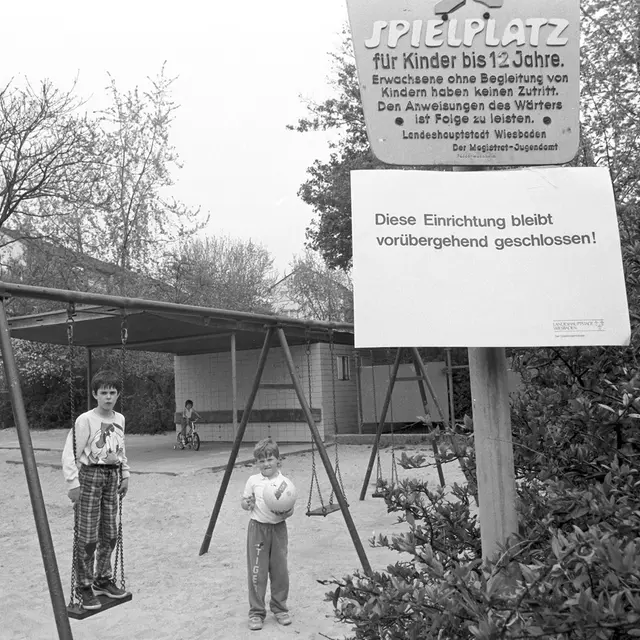
When people chained themselves to the railroad tracks to protest the nuclear waste transports, they didn't think about abolishing capitalism. At least not my parents nor grandparents did so when protesting and getting fined for it.

Chernobyl was a COVID like cultural moment in Germany.

triceratops 3 hours ago | parent

69% of the world's uranium comes from 3 countries - Kazakhstan, Canada, and Namibia.

I don't think we should be fighting nuclear. We should build it where it makes sense. But we should dispel the idea that it removes dependency on foreign fuel suppliers.

csense 2 hours ago | parent

The common thread here is obvious: Left unchecked, the byproducts of industry harm the planet too much.

For climate activists, the byproduct is CO2 emissions, and it harms the planet through the mechanism is global warming.

For anti-nuclear folks, the byproduct is radioactive waste, and it harms the planet through mechanisms like long-term leakage, accidents, and meltdown.

vlovich123 2 hours ago | parent

Why do these groups ignore the massive ecological problems with solar then?

And accidents and meltdowns in the newest generation reactors afaik are mitigated concerns. Even the old reactors are still running without issues. Even Fukushima wasn’t terrible all things considered, all credit to the heroes involved that contained it.